NEO brain implant: helping people grasp objects
NEO turns brain signals into commands for an assistive glove. It may help people with paralysis following a cervical spinal cord injury grasp objects.
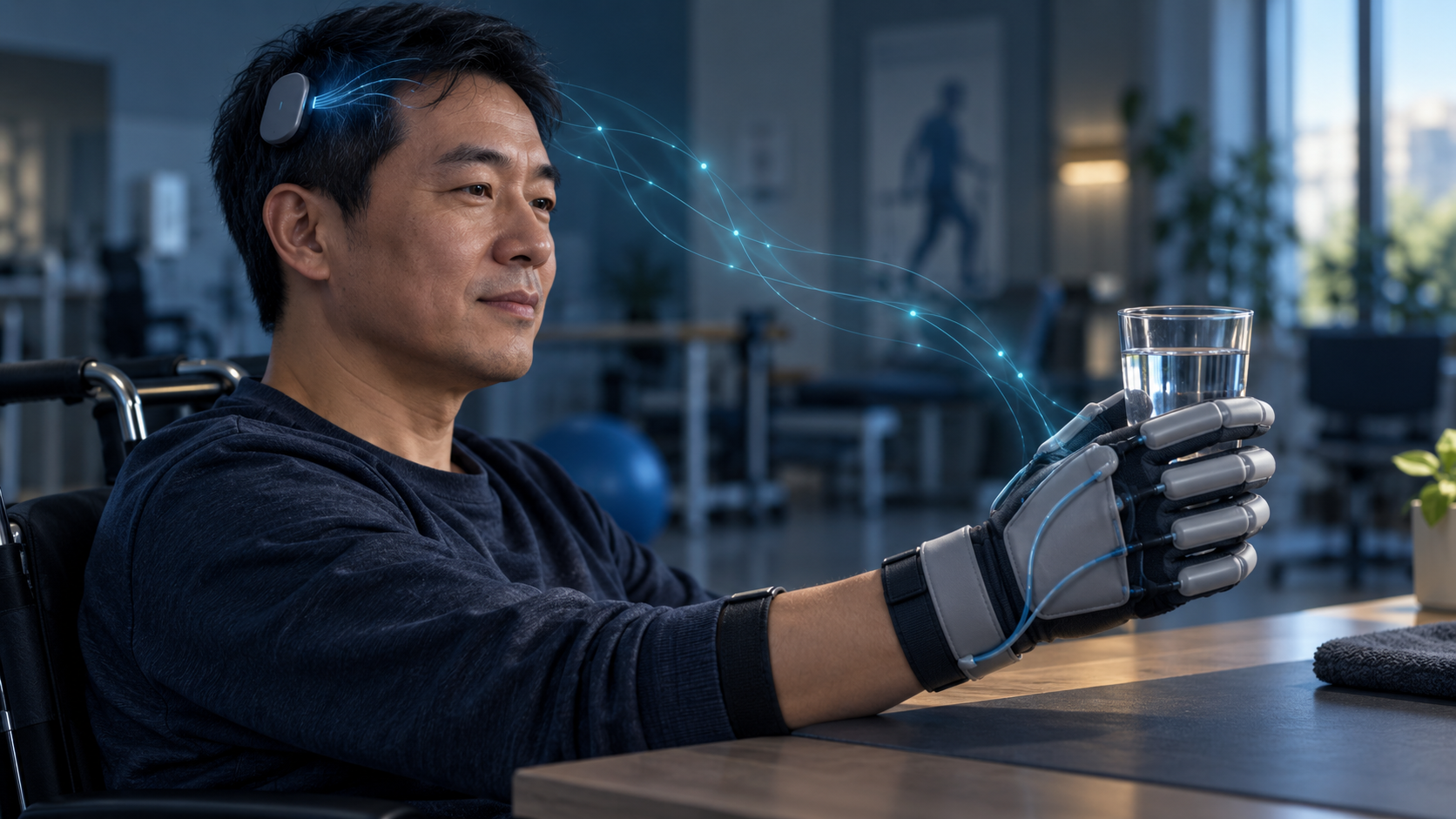
China’s National Medical Products Administration (NMPA) announced market approval for the NEO system on March 13, 2026. Developed by Neuracle in collaboration with researchers at Tsinghua University, this brain–computer interface is designed to enable people with severe mobility impairments to control an assistive glove through brain signals. Approval covers a specific group of patients aged 18 to 60 with paralysis following a cervical spinal cord injury who cannot grasp objects but retain some upper-arm function. The implant is approximately coin-sized, with electrodes placed above the dura mater, the tough protective membrane surrounding the brain, without penetrating brain tissue. The system wirelessly transmits recorded signals to an external device, which converts them into commands for the assistive glove. An intention to move can thus become a practical action, such as grasping a bottle and bringing it to the mouth. Tsinghua University previously described a patient who could drink independently with the system after implantation and training at home. This approach still requires surgery, even though the electrodes do not enter the cerebral cortex. Claims circulating on social media about a “100 percent success rate” require particular caution: successfully completing a specific task with a device does not mean paralysis has been cured or full mobility restored. Approval should therefore be understood as a step towards practical medical use for clearly defined patients and purposes. For patients, its real value will depend on how safely, reliably and consistently it helps them perform everyday tasks with less assistance from others.