Asteroid mining: new study shows how far we still are from it
Astronomers have analysed meteorites linked to C-type asteroids. The conclusion: before any mining, we need to know far more about what these asteroids are actually made of.
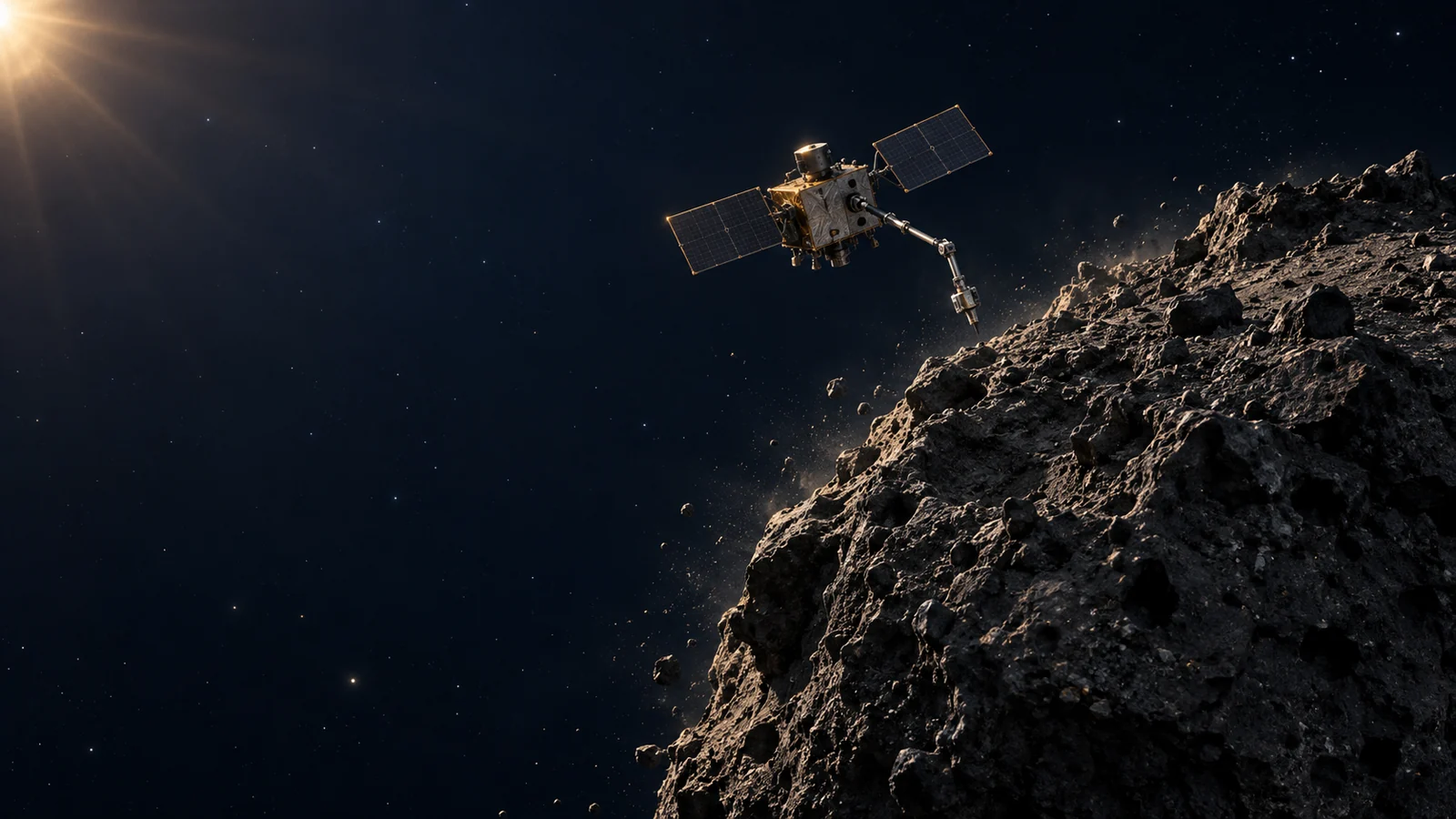
For years, asteroid mining has been sold as one of the big ideas of the commercial space sector: find a near-Earth asteroid, extract raw materials and process them in space. After the first wave of enthusiasm the topic went quiet, because the technology for reliable extraction in low gravity is not ready yet. A team led by Josep M. Trigo-Rodríguez of the Institute of Space Sciences (ICE-CSIC) analysed carbon-rich meteorites linked to C-type asteroids. These asteroids make up about 75 percent of known asteroids, but carbonaceous chondrites — their possible samples on Earth — account for only around 5 percent of meteorites and often break apart or become contaminated before anyone collects them. The study was published in the journal Monthly Notices of the Royal Astronomical Society. The results suggest that water-bearing minerals could be the most valuable resource, rather than the precious metals that get most of the attention. In space, water can also serve as fuel for missions further out. At the same time, the authors warn that most asteroids contain relatively small shares of precious elements — so this is not a story about getting rich quickly. The most realistic path runs through new sample-return missions, a better understanding of the parent bodies of meteorites, and systems that can operate in microgravity. The idea is not dead, but its future will not be built on speculation — it will be built on chemistry, samples and very demanding engineering.